Consult our Product Care Guides to preserve the longevity of your products.
This guide will help you care for your garden furniture. It covers cleaning, maintaining, storing and protecting it, so it looks its best for years to come.
Clean your garden furniture
Cleaning garden furniture regularly keeps it looking its best and helps it last longer. We recommend cleaning it twice a year: once at the start of spring, and again at the end of summer or autumn.
-
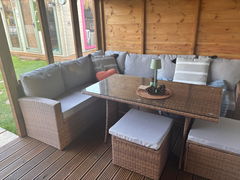
Rattan: Sponge clean with warm soapy water.
-
Wood: Clean with hot soapy water and a soft bristle brush.
-
Metal: Wash with hot soapy water and a soft cloth.
-
Plastic/Polywood: Hand wash with a sponge and soapy water. Stubborn stains can be removed with white distilled vinegar or baking soda.
-
Glass: Wash with hot soapy water and a soft cloth.
Clean your cushions
Use a soft bristle brush or a soft cloth with diluted warm soapy water. Wipe away excess water with a soft cloth, then blot dry with a towel.
Dry cushions outdoors, or place them in a warm airing cupboard.
Caring for wooden garden furniture
Clean wooden furniture regularly with a soft brush or cloth to remove dirt and debris. Avoid harsh chemicals or abrasive cleaners, as these can damage the wood.
Apply a protective finish, such as varnish or oil, to help stop moisture getting into the wood and causing it to rot or warp.
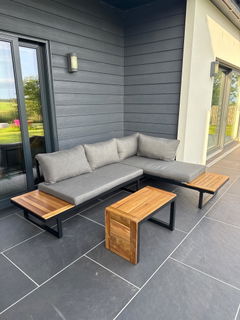
Acacia will weather naturally to an attractive silvery-grey finish. If you'd prefer to keep its honey-gold colour, treat it with oil, applied with a cloth or paintbrush.
Caring for metal garden furniture
Rust and corrosion can affect metal furniture and any metal parts on your garden furniture. Over time, they can weaken the metal, making furniture unsafe and causing permanent damage.
Check all metal parts regularly. If you find rust, remove it with a suitable rust remover. To stop it coming back, polish the metal with car wax to make it water-resistant, or use a metal protective coating.
General advice
- Avoid dropping furniture on its corners or feet, or leaning back on two legs, as this can weaken and damage the frame, feet or legs.
- Keep sharp objects, such as keys, buckles and heels, away from your furniture.
- Avoid exposing furniture to excessive water or sunlight.
- Avoid contact with chemicals such as hair and skin products, fake tan, insect repellent, cosmetics, or household cleaners not recommended for the furniture.
- Never place hot dishes or mugs directly on the furniture. Always use table mats or coasters.
- In strong sunlight, be careful with objects that can magnify light (such as glasses, drinking glasses and glass vases), as this can cause damage.
- Tempered glass is strong, but it can still break in very hot or freezing weather. Taking care in extreme temperatures will help it last longer and stay safe.
Protect your garden furniture from the elements
Over time, weather can seriously damage garden furniture. Persistent rain can rust metal and rot wood, and sunlight can fade colours, so it's important to protect it.
- Use garden furniture covers, or store furniture in a shed or under cover when it's not in use.
- Cover or store furniture during harsh weather, such as heavy rain, snow or extreme heat.
- Keep upholstery out of direct sunlight to prevent fading.
- Bring cushions inside at night and when it's raining, as damp can cause mould.
- Don't let furniture stand in water, as this can rot wood and rust metal. Move it to a spot where water doesn't collect.
- In autumn and winter, we recommend storing furniture in a garage or shed, away from rain, damp and frost.
- Inspect your furniture regularly for signs of wear, and make any repairs needed to help it last longer.